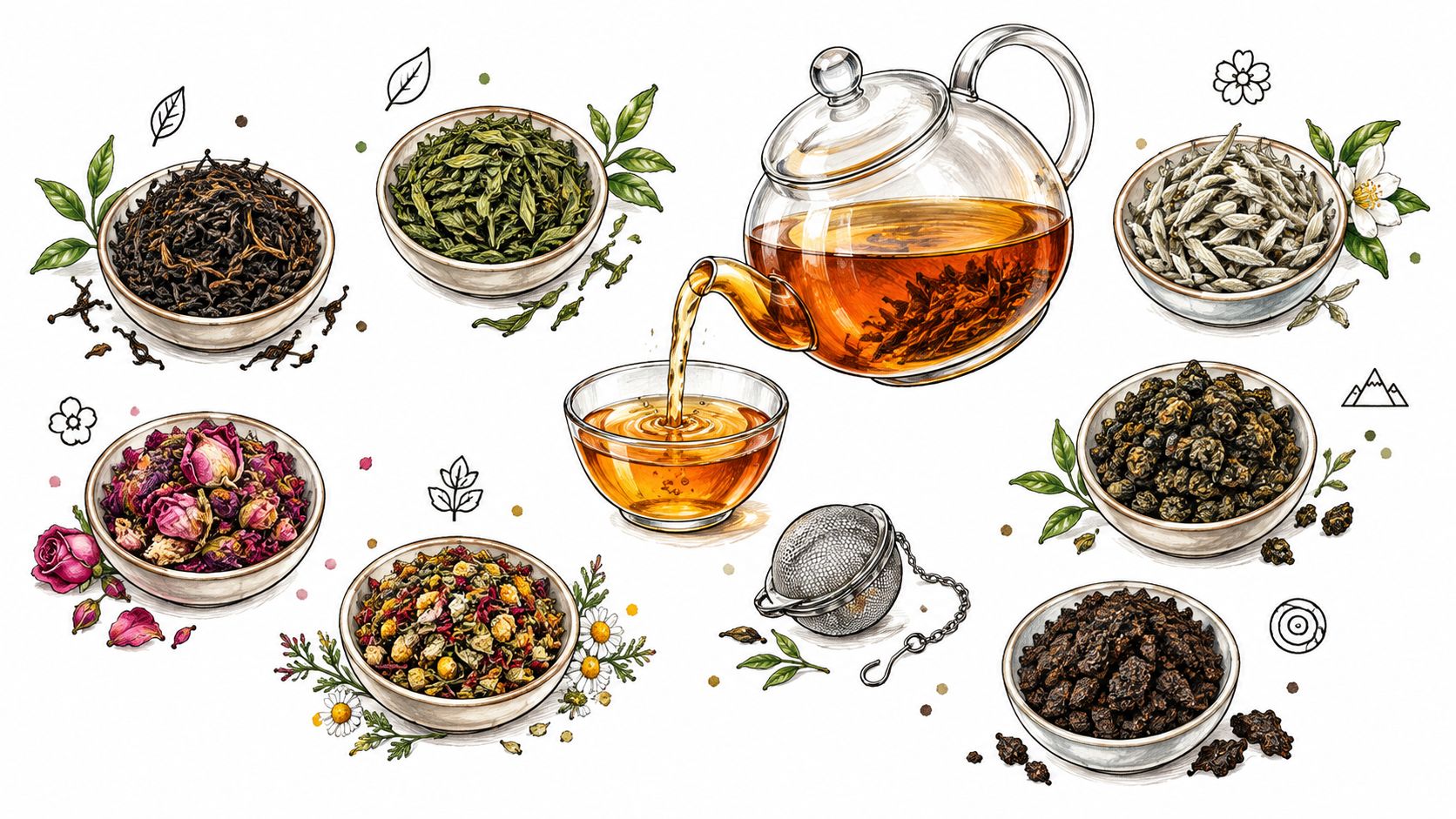
Best Loose Leaf Tea: 7 Picks for Better Brewing
Discover the best loose leaf tea options for every taste, from beginner-friendly blends to regional teas, with practical brewing guidance.
By Yuvraj Kewate · 2026-10-21
You're standing in a kitchen with a kettle, a mug, and a dozen open tabs. One shop pushes flavored blends, another lists single-origin oolong you've never heard of, and a third expects you to know which infuser fits which leaf. You don't need more tabs. You need a cup that fits how you already drink.
Start with your habit. If you want a familiar morning cup, choose a recognizable black tea or green tea first and learn it well. If you already brew daily and want range, move toward oolong, pu-erh, or Chinese regional teas with clear origin details. If caffeine keeps you up, build your evening rotation around herbal blends and botanicals instead of forcing a caffeinated tea into the wrong slot.
This guide compares eight strong options by flavor range, sampling support, product information, price context, and equipment needs. Use it as a decision tool, not a popularity contest. Pick your flavor lane, decide how much variety you want, check whether samples will save you money, and then match that answer to a retailer. That's how you find the best loose leaf tea for your cup.
Table of Contents
- 1. Tealyra
- 2. Harney & Sons
- 3. Rishi Tea & Botanicals
- 4. Adagio Teas
- 5. Upton Tea Imports
- 6. The Tea Spot
- 7. TeaVivre
- 8. TeaSource
- Top 8 Loose Leaf Tea Brands Compared
- Build a Loose Leaf Tea Routine You Will Actually Use
1. Tealyra
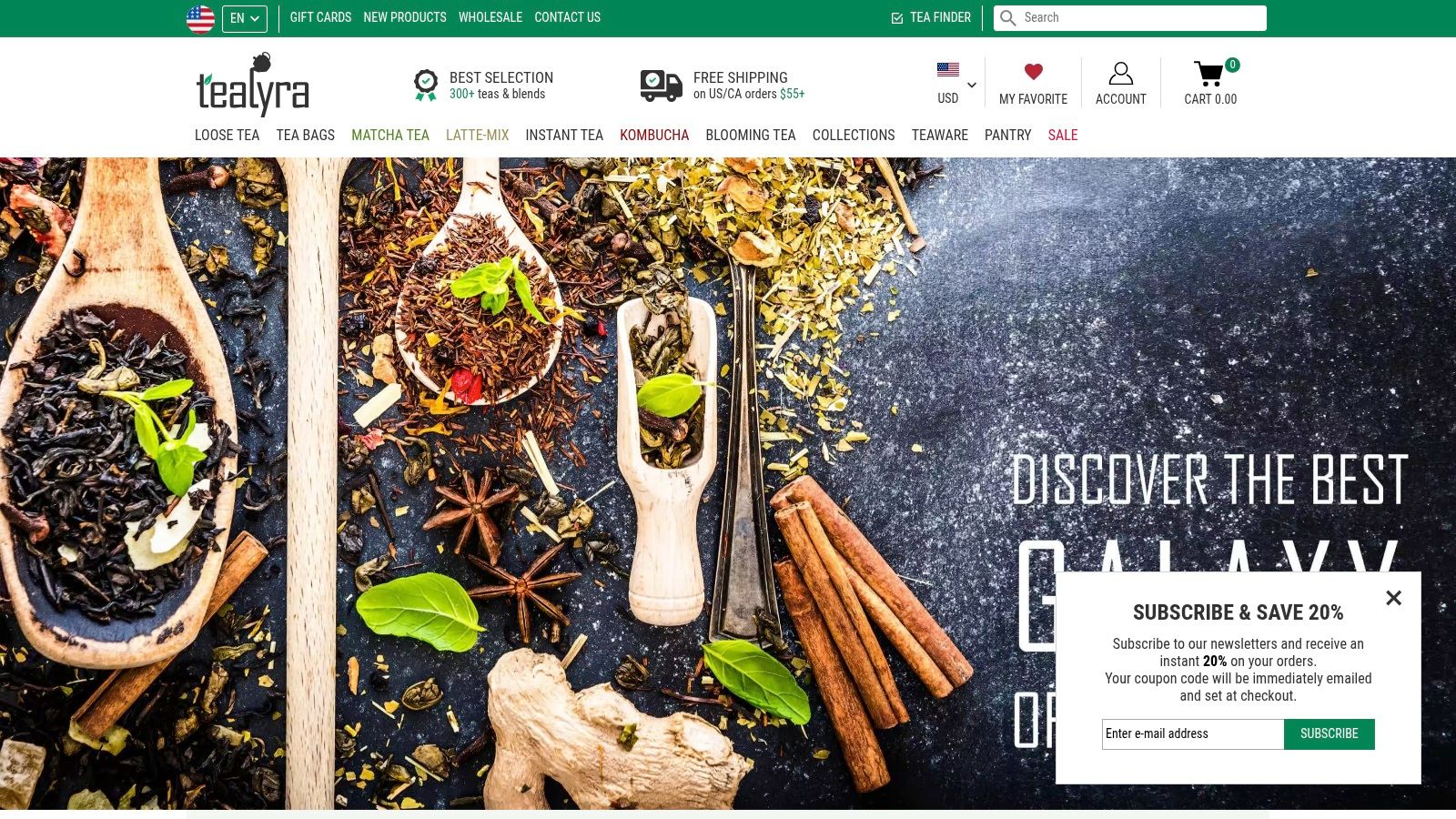
Pick Tealyra when you want one cart to solve the whole setup: daily drinker, second tea for contrast, and the infuser that makes both taste right. It suits buyers still mapping their preferences, because the shop spans loose tea, tea bags, and accessories. That range prevents the common first mistake: buying decent leaf, then strangling it in a tiny ball or brewing it at the wrong temperature.
Shop the loose leaf tea range by the job it must do. Choose a bold black tea for rushed mornings and milk. Keep a green or white tea for afternoons when you can watch the kettle. Use herbal blends after dinner if caffeine ruins your sleep.
Why Tealyra Fits Most First Orders
Whole leaf needs room, water contact, and a repeatable method. Consumer Reports separates water heat by style, with boiling water suited to black, pu-erh, and herbal teas and cooler water better for oolong, green, and white teas; one cited herbal example sits around 175°F (79°C) for 2 to 3 minutes in its guidance on making a proper cup of tea. Apply that and your first order improves fast: fewer bitter greens, fuller black cups.
- Start narrow: one familiar daily tea plus one contrast, rather than six experiments.
- Buy the tool with the tea: add a roomy basket infuser or simple pot if you own none.
- Change one variable: log dose, heat, and steep time, then adjust only one next brew.
Tealyra is weaker if you already chase one region and want harvest level detail for every lot. It is stronger for breadth, convenience, and a low friction path from browsing to brewing. If you can name the style you want and the tool you need in one sentence, order from Tealyra; if you cannot, start with a sampler from a specialist shop instead.
2. Harney & Sons
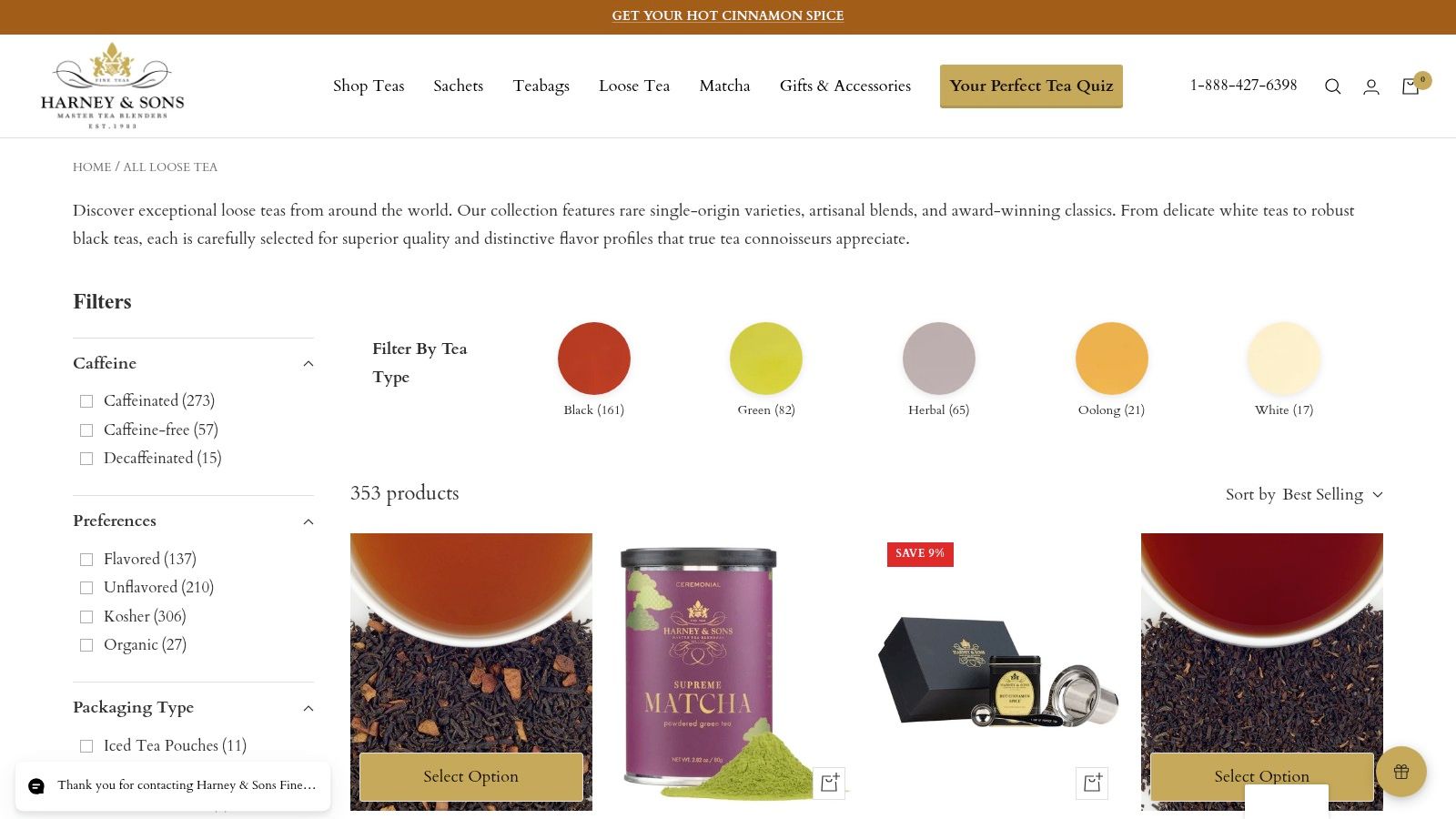
Harney & Sons is the easiest recommendation for a beginner who wants names they recognize. You can shop black, green, herbal, oolong, and white teas without decoding specialist terminology first. Start with Earl Grey Supreme if you like citrus aroma, Paris if you want a flavored black blend, or Hot Cinnamon Spice if you prefer a sweet, spiced cup that needs little added sugar.
Samples Do the Heavy Lifting
The smart move here is sampling before you commit. On the Harney & Sons loose tea collection, examples include sample sizes around $4, 4 oz tins around $12 to $13, and 1 lb bags around $31 to $36. Buy three samples in different lanes, brew each twice, and only then order a tin of the winner. You'll spend less and learn faster.
That approach also solves the main weakness. The catalog is large enough to stall a new buyer, and the strong flavored blend range won't excite a purist hunting only unflavored, single-origin leaf. Ignore the full catalog on your first visit. Filter by tea type, pick one familiar style, and let the sample format carry the risk.
Practical rule: If a shop offers a sample, buy the sample first. A cheap test beats an expensive guess every time.
Harney & Sons fits gift buyers too, because tins look presentable and the flavors are approachable for people who don't yet brew loose leaf daily. It's also a sensible household choice when one person wants classic black tea and another wants herbal tea at night. If you're comparing everyday drink retailers more broadly, the Death Wish Coffee store profile shows the same lesson from the coffee side. Familiar entry products build a routine faster than rare picks do.
3. Rishi Tea & Botanicals
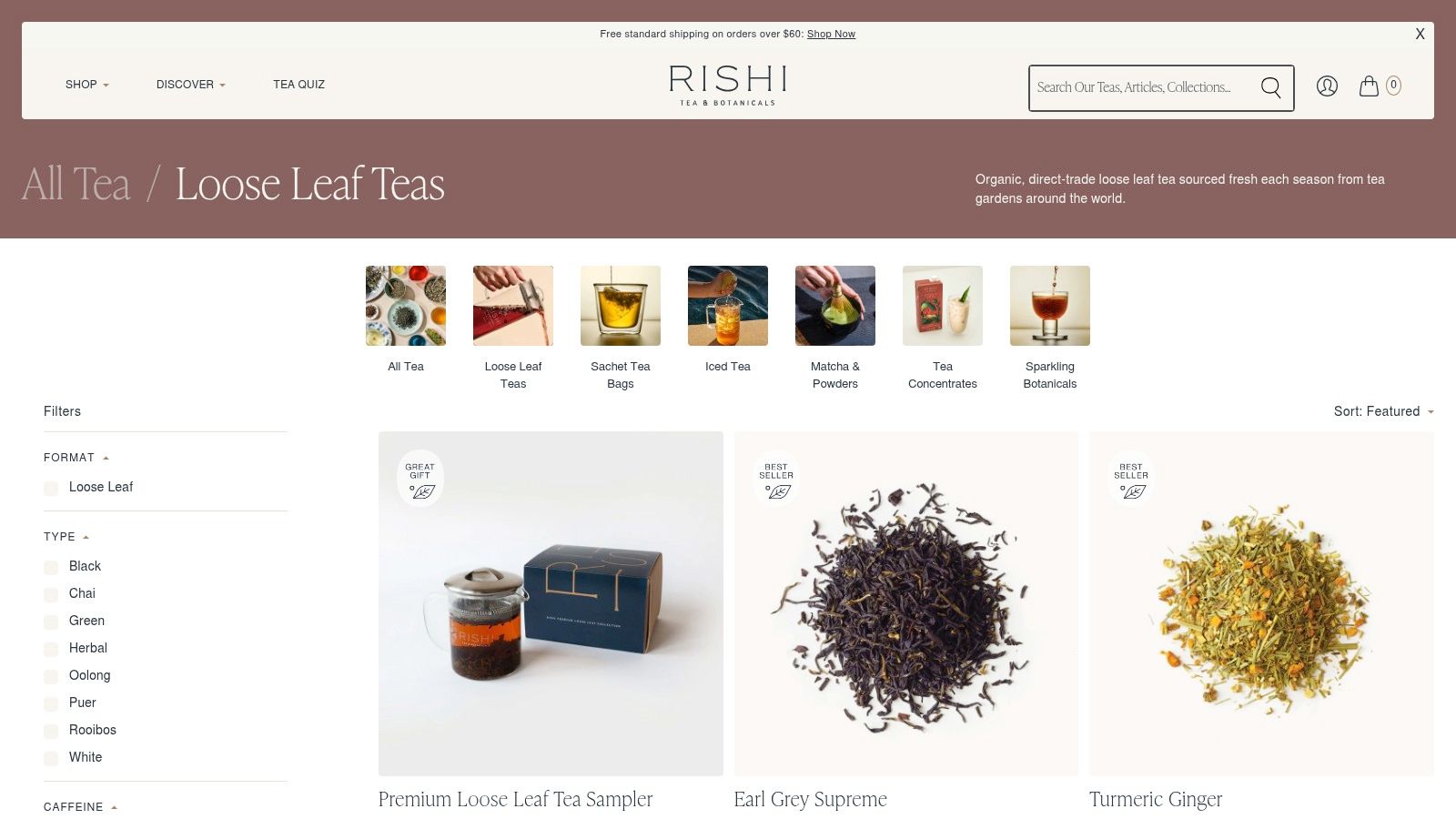
Pick Rishi if you read labels. Its product pages give you tasting notes, tea type, and sourcing context, so you're not choosing by a pretty name alone. That information helps you predict whether a tea will taste bright, earthy, floral, or spiced before it arrives, and it makes repeat buying more reliable.
The range covers organic black and green teas, chai, oolong, pu-erh, and herbal blends. That breadth suits a household splitting its day by caffeine. Brew a traditional tea in the morning, then switch to a caffeine free botanical in the evening without opening a second account elsewhere. Sampler and gift set options also make it a clean choice for a considered gift.
What to Check Before You Buy
On Rishi Tea & Botanicals loose leaf teas, examples of loose leaf prices range from about $14 to $21, with smaller teaser sizes costing less. Use a teaser when you're testing a new category like pu-erh, because earthy fermented flavor divides people quickly. Don't buy a full bag to discover you dislike the style.
- Read the tasting notes: Match them to flavors you already enjoy in food and drink.
- Use reviews carefully: Look for comments on strength and brewing, not just star ratings.
- Separate tea from botanicals: Decide first whether you want true tea or a caffeine free infusion.
Rishi costs more than basic supermarket options, and shoppers who want only traditional unflavored leaves may find the botanical mix less focused. Pay the premium when sourcing detail and clear flavor guidance matter to you. Skip it if your only goal is the lowest price per bag.
4. Adagio Teas
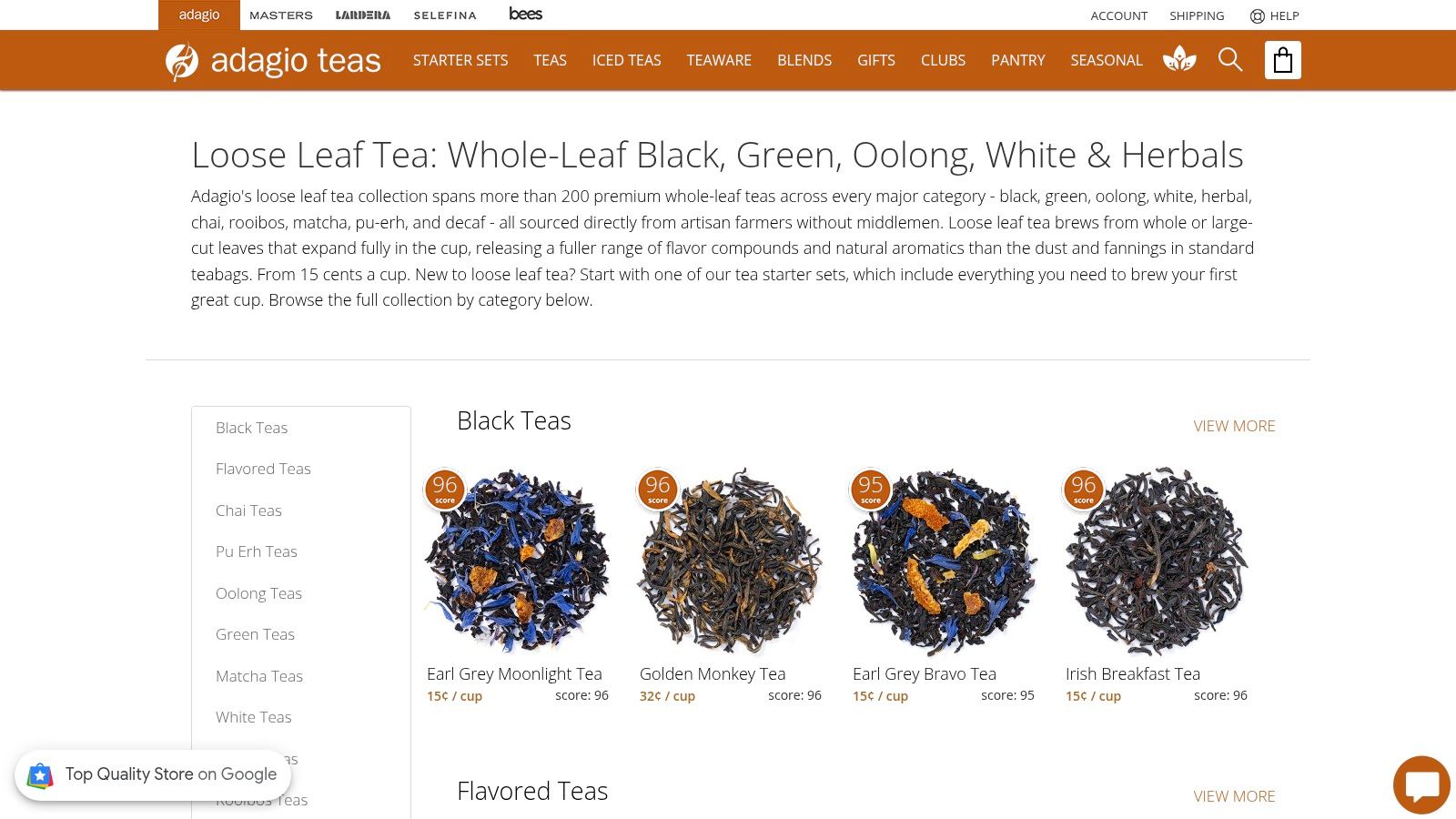
Adagio is built for exploration. Its catalog spans black, green, white, oolong, herbal, chai, rooibos, matcha, pu-erh, and decaf categories, so you can test a style before you build a specialty order elsewhere. If you don't yet know whether you prefer malty, floral, grassy, or spiced flavors, start here.
Buy a starter set or sampler first. That's not a cautious suggestion, it's the whole point of this retailer. A sampler turns guesswork into a side by side test, and starter gear removes the separate problem of figuring out how to strain the leaf. Brew each sample with the same water and mug so the comparison stays fair.
Judge Cost by the Cup
On Adagio Teas loose leaf tea, some loose leaf options are advertised from about 15 cents per cup, and some listings display an estimated cost per cup. Use that number. Package price alone misleads you because leaf density, dose, and resteeping change what you spend each morning.
That value lens matters across the category. One industry estimate valued the global loose leaf market at approximately USD 1.17 billion in 2025 and projects it to reach USD 1.75 billion by 2034, with more than 35% of consumers preferring loose leaf to bagged tea, according to Business Research Insights loose leaf tea market data. Treat that as directional market context, not a reason to overpay. Your cost per satisfying cup is the metric that affects your budget.
The downside is choice overload, and heavy flavored blend coverage can bury single-origin options. Set a shortlist of three categories before you browse. If you can't name what you're testing, you're not sampling, you're wandering.
5. Upton Tea Imports
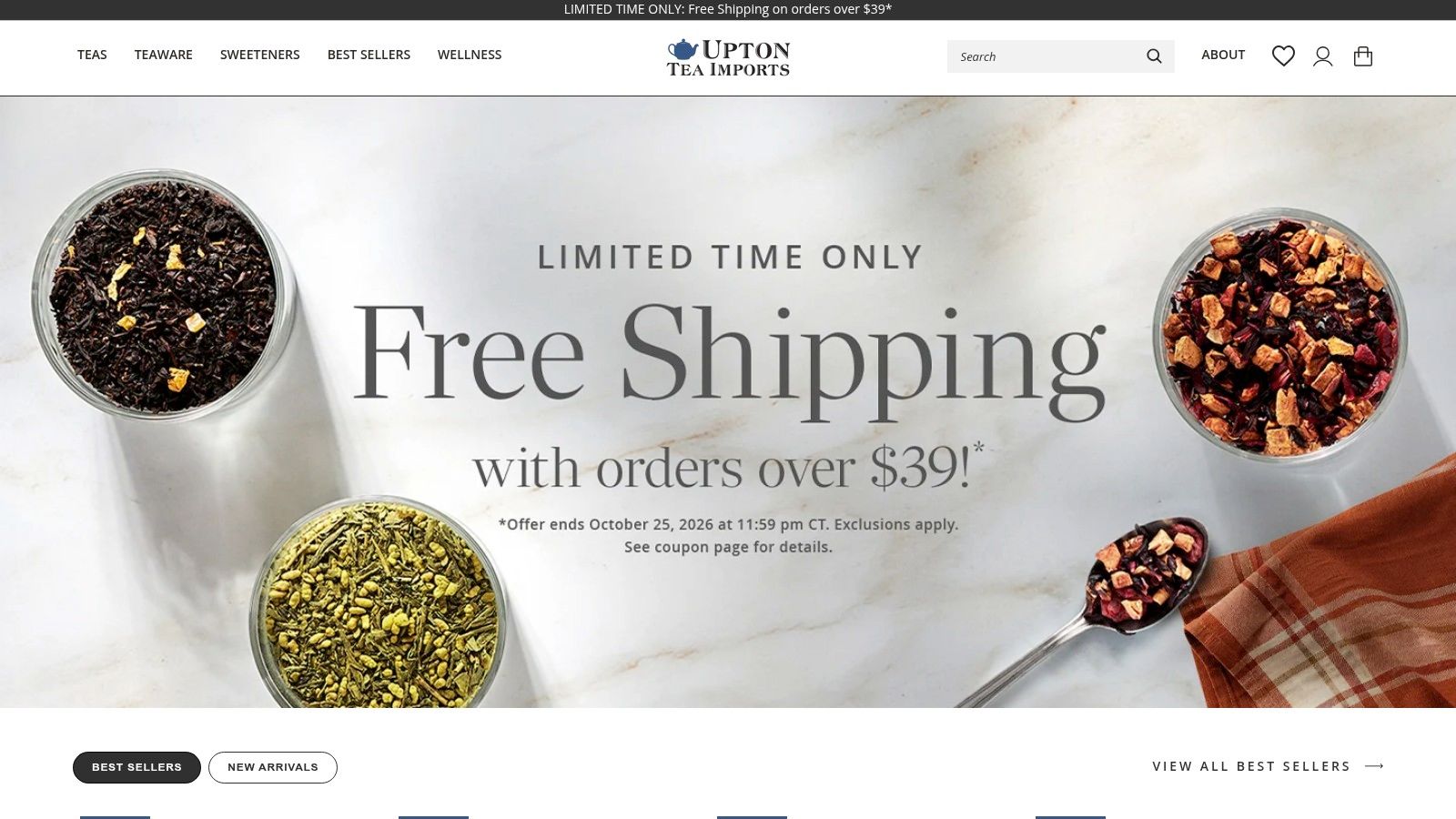
Upton rewards methodical tasters. Where a general retailer helps you find one tea you like, Upton helps you understand why you like it. Its samplers and tea flights group related teas together, so you can compare regions and styles under the same brewing conditions and spot real differences in aroma, body, and finish.
Choose a flight when you've outgrown your first blend. Samplers cover black, green, Japanese, Chinese, oolong, herbal, and decaffeinated teas, and the wider catalog pulls from multiple countries and regions. That regional view matters because origin and processing shape the cup as much as the category label does.
How to Run a Useful Flight
At Upton Tea Imports, sampler examples range from about $17.75 to $44.50, some sets contain four tins of about 35 grams each, and beginner flights include several samples and filters. Brew one tea per session, keep notes, and rank by aroma clarity, bitterness, body, and whether you'd drink it again tomorrow. That last question cuts through novelty.
A sampler only teaches you something if you change nothing except the leaf. Keep the mug, water, dose, and timer constant.
Expect more research here than at a beginner oriented shop, and expect sampler contents to shift with seasonal availability. That's a fair trade for depth. If you're browsing other food and drink buying guides while you build a pantry routine, the food and drink store category is a useful companion browse. For tea specifically, Upton is the pick when comparison itself is the hobby.
6. The Tea Spot
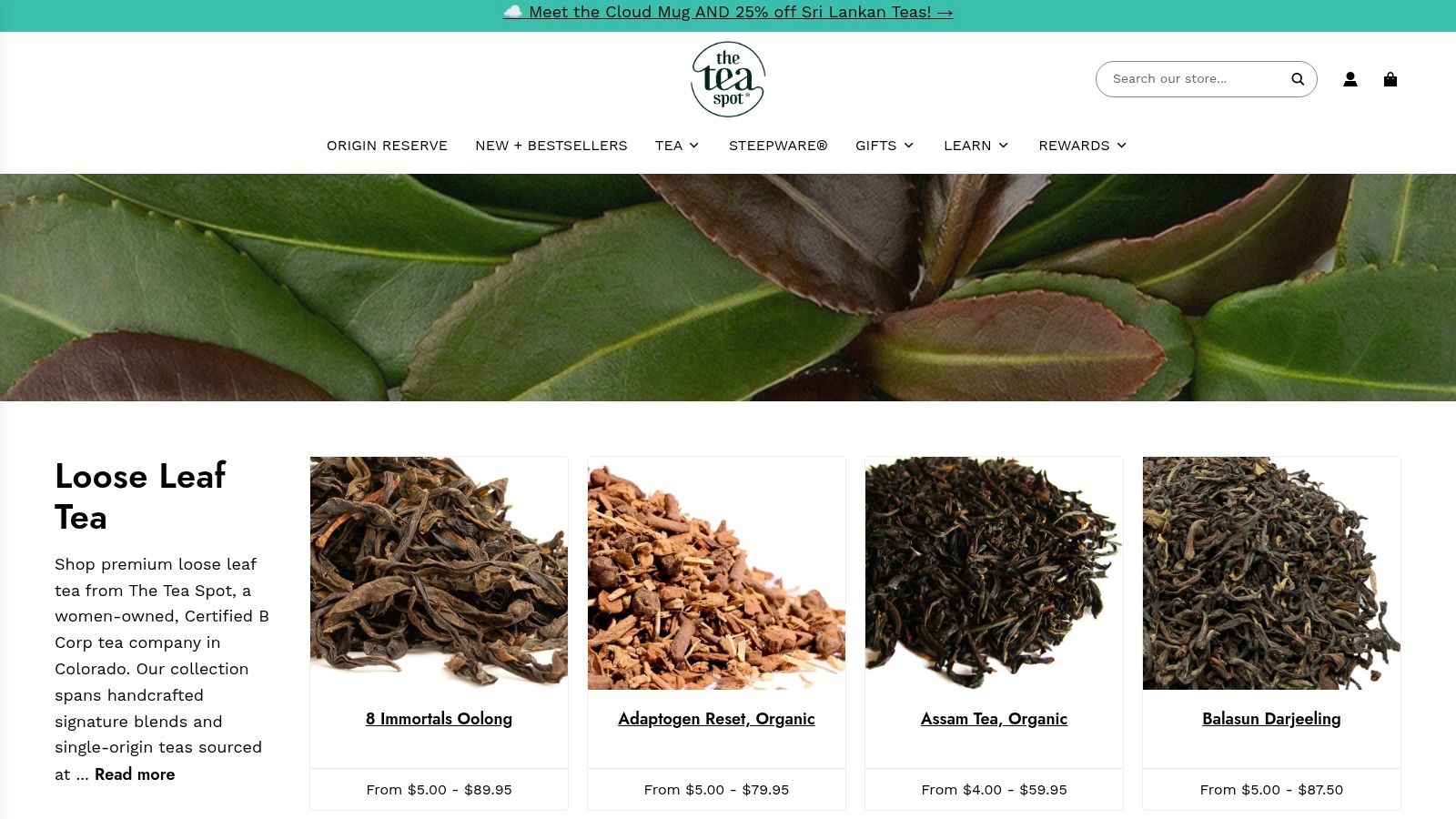
The Tea Spot solves a practical problem that pure tea shops ignore. You need leaf, but you also need a way to brew it at your desk, in a small kitchen, or on the road. This retailer sells loose leaf blends, single-origin teas, and brewing equipment together, so your setup works from the first delivery.
Its range covers black, green, white, oolong, pu-erh, and herbal teas, with organic and caffeine free options in the mix. Collection pages organized by tea type keep browsing simple. Pick a morning black tea, add an evening herbal, then add the infuser or travel tumbler that fits where you'll drink them.
Match the Gear to the Location
On The Tea Spot loose leaf tea collection, some entry level tea sizes start around $4 to $6, and free shipping is advertised on qualifying orders of $60 or more to the lower 48 states. Small sizes keep the first test cheap. The shipping threshold makes more sense once you're adding equipment or restocking a proven favorite, not when you're padding a cart with untested flavors.
- Desk brewing: Choose a mug sized infuser you can rinse quickly between meetings.
- Travel brewing: Choose a sealed tumbler and a forgiving black or herbal tea.
- Home brewing: Choose a larger basket or pot if you brew for two people.
Prices vary widely by tea and package size, so compare quantity before you judge value. The gear heavy catalog is also unnecessary if your kitchen is already equipped. Buy here when convenience across tea and tools is the deciding factor. That's a legitimate reason, not a compromise.
7. TeaVivre
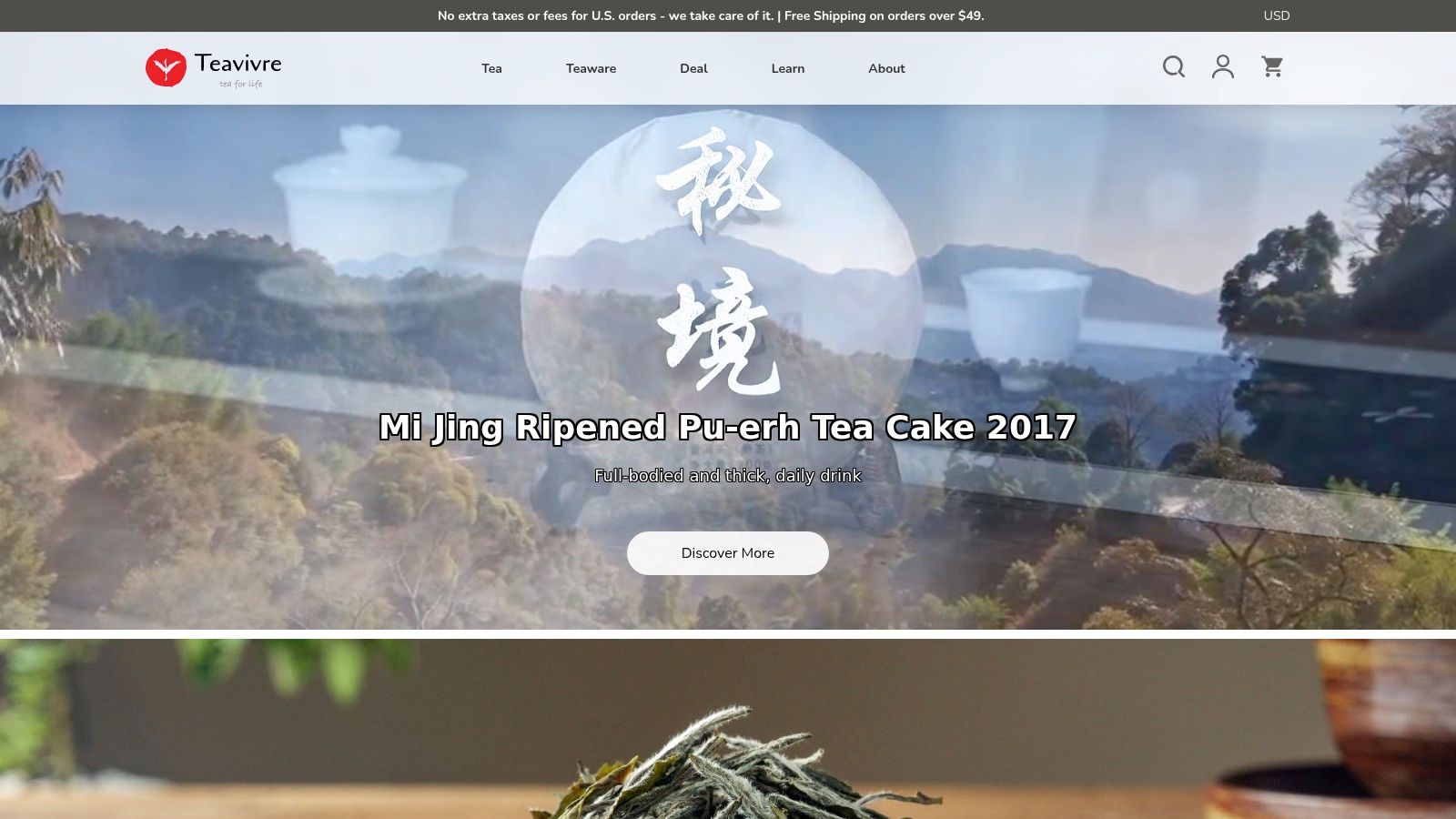
Go to TeaVivre when breakfast blends stop being interesting. This retailer specializes in Chinese teas across green, black, white, oolong, and pu-erh styles, with regional options such as Dragon Well and Phoenix Dan Cong. If origin is the flavor to you, this is your shop.
That focus has deep roots. Tea drinking in China is evidenced at least as early as the 2nd century BCE, and in 1391 the Hongwu emperor decreed that only loose tea would be accepted as tribute, a shift described in the history of loose tea. Regional processing isn't a marketing layer here. Pan firing, sun drying, cultivar, and place are the product.
Read the Product Page Like a Spec Sheet
At TeaVivre, featured examples range from about $17.90 to $45.90, free shipping is advertised on U.S. orders over $49, and the site says it handles additional U.S. import fees for U.S. orders. Product details can include origin, harvest date, leaf appearance, aroma, and tasting notes, and some listings show customer ratings and reviews. Use harvest and origin information to choose, then use reviews to sanity check strength and brewing behavior.
Don't start here if you mainly want Western style flavored blends or if unfamiliar Chinese styles feel like homework. Start here when you want to learn how one country's regions produce very different cups from the same broad categories. Buy one green tea and one oolong, brew them below a rolling boil, and taste what processing does. You'll learn more from that pair than from a random mixed dozen.
8. TeaSource
TeaSource is the middle path. It carries everyday blends for an easy daily cup and origin specific specialty teas when your taste gets more specific, plus herbal blends, matcha, teaware, and gifts. If your household includes both a casual drinker and a curious one, one order can serve both without forcing either person to compromise.
The catalog covers black, green, white, oolong, pu-erh, herbal, and specialty teas. Category filters help you browse by tea type and, for some categories, by origin. Use those filters aggressively. Decide whether this order is for a daily driver, a gift, or an experiment, then filter until the choice is small enough to make.
A Sensible Restock and Gift Option
At TeaSource, many listed teas are around $6 to $14 with specialty products priced higher, and free shipping is advertised on orders over $49. That pricing spread is useful only if you compare package sizes as you go. A low sticker price on a small pouch isn't automatically better value than a larger bag you'll finish.
The global context explains why ranges like this keep expanding. The FAO reported global tea production reached 6.7 million tonnes in 2022, while global consumption reached 6.5 million tonnes in 2022, in its FAO global tea market assessment. You're choosing inside a large, diverse supply chain, so a retailer that helps you filter by type and origin earns its keep. If you also plan meals around delivery convenience, the HelloFresh store profile is a related read, but for tea, TeaSource wins on balanced variety.
Top 8 Loose Leaf Tea Brands Compared
| Retailer | Selection & focus | Buying guidance 🔄 | Price & resource considerations ⚡ | Ideal use & key trade-off ⭐ |
|---|---|---|---|---|
| Tealyra | Broad selection of loose tea, tea bags, and accessories | Catalog breadth offers options; specific sampling and product-detail features are not provided here | Pricing and package sizes not specified | Useful for shoppers seeking a wide tea-and-accessories selection; compare product details and quantities before buying |
| Harney & Sons | Classic teas and flavored blends across black, green, herbal, oolong, and white categories | Sample sizes and multiple package formats on many products | Examples include samples around $4, 4 oz tins around $12–$13, and 1 lb bags around $31–$36 | Good starting point for familiar styles and trying samples; extensive flavored range may not suit single-origin-only shoppers |
| Rishi Tea & Botanicals | Traditional teas, organic options, chai, and botanical infusions | Tasting notes, sourcing context, some teaser sizes, samplers, and gift sets support comparison | Loose-leaf examples are about $14–$21; smaller teaser sizes cost less | Suits shoppers who value product and sourcing details; may cost more than basic supermarket tea |
| Adagio Teas | Broad range including classic, flavored, herbal, matcha, pu-erh, and decaf options | Starter sets, samplers, categories, and estimated cost per cup on some listings | Some options are advertised from about 15¢ per cup | Strong for exploring many styles; the large catalog can feel overwhelming |
| Upton Tea Imports | Specialist catalog spanning multiple tea types and countries or regions | Samplers and tea flights help compare related teas; some list contents and quantities | Sampler examples range from about $17.75 to $44.50; availability can vary seasonally | Best for focused exploration and comparing styles; may require more research than beginner-oriented shops |
| The Tea Spot | Blends, single-origin teas, organic and caffeine-free options, plus brewing gear | Browse by tea type; shop for tea and accessories together | Entry-level sizes start around $4–$6; free shipping on qualifying orders of $60 or more to the lower 48 states | Convenient for shoppers who also need brewing equipment; broader catalog may include unnecessary items |
| TeaVivre | Chinese green, black, white, oolong, and pu-erh teas, including regional selections | Product details may include origin, harvest date, leaf appearance, aroma, and tasting notes | Featured examples range from about $17.90 to $45.90; free U.S. shipping advertised over $49 | Well suited to exploring Chinese origins and regional styles; less focused on Western-style blends |
| TeaSource | Specialty and everyday teas, including flavored blends, origin-specific options, matcha, pu-erh, teaware, and gifts | Filters support browsing by tea type and sometimes origin; a sampler may help narrow a large catalog | Many teas are around $6–$14; free shipping advertised over $49; specialty items cost more | Offers a middle ground between approachable blends and specialty teas; compare package sizes as prices vary |
Build a Loose Leaf Tea Routine You Will Actually Use
Your routine needs three pieces, not a shelf of half finished tins. Choose one daily tea, one sampler for experimentation, and one brewing tool that fits your schedule. A familiar black tea for weekday mornings, a small oolong or herbal sampler for weekends, and a basket infuser you can rinse in seconds will teach you more than a large first order ever will.
Judge value by the brewed cup. That's where many buyers go wrong, and it's the same frustration that runs through beginner discussions about being overwhelmed by loose leaf choices and brewing variables. Water temperature, steeping time, infuser selection, leaf expansion, and first tea budget matter more than a headline ranking. Fix those variables and an ordinary tea tastes better. Ignore them and an expensive tea disappoints you.
Run a Simple Two Tea Test
Brew a familiar black or green tea and one contrasting oolong or herbal blend with the same basic method. Weigh or measure the leaf the same way, use the same mug, and keep notes on aroma, bitterness, astringency, body, and finish. Try a second steep where the tea allows it, because repeat steep potential changes real cost per cup. After a week, you'll know which one you reach for without thinking. Buy the larger package of that one.
Store it properly once you do. Keep leaf airtight and away from heat, light, moisture, and strong odors, because tea absorbs smells from the cupboard around it. Don't store a delicate green tea next to coffee or spices and then wonder why it tastes flat. Small storage discipline protects the money you spent on better leaf.
Be Honest About Bags, Safety, and Waste
Loose leaf isn't automatically the right answer for every situation. A well designed tea bag can be more convenient and more consistent at work or while traveling, while loose leaf adds equipment, measurement, cleanup, and storage demands. Safety claims need the same honesty. A 2025 study summary reported that paper and cellulose tea bags adsorbed substantially more lead and cadmium from water than cotton or nylon bags, in coverage of brewing tea and heavy metal adsorption research. That doesn't prove bags are safer overall. Material, water quality, brewing conditions, and disposal all matter, so don't buy on a slogan.
Choose the format you'll use well. If loose leaf at home and bags at the office keep you drinking tea you enjoy, that's a good system. Perfection that lasts three days is worse than a simple routine that lasts all year.
Bottom line: The best choice is the tea you can brew correctly, afford repeatedly, and finish while it's fresh.
Start today with one decision. Pick your daily lane, order a sample or small size from the retailer above that matches it, add the simplest infuser that fits your mug if you need one, and brew your first cup with a timer beside you. Don't buy the large refill yet. Earn that purchase with a week of cups you look forward to, then stock up with confidence.