Overnight Check Delivery: How It Works for Merchants
Learn how overnight check delivery works, including cutoff times, costs, security risks, and when Shopify merchants should use it versus digital alternatives.
By Yuvraj Kewate · 2026-09-05
You're staring at a payment problem that should've been simple. A vendor needs money tomorrow, your ACH window is too slow, and cutting a standard check means your recipient won't see it in time. That's where overnight check delivery comes in, but only if you understand what it does, what it doesn't, and where the risk sits.
At merchant level, this is less about “speed” and more about control. You're buying a courier timeline, a printing workflow, and a cutoff rule that can save or sink a payment deadline. If you treat it like instant money, you'll mismanage cash flow. If you treat it like a physical logistics tool, you can use it intelligently.
Table of Contents
- What Overnight Check Delivery Actually Means
- How the Overnight Check Process Works
- Costs and Timing Realities You Should Expect
- How Check Supply Can Help
- Security Risks and Check Fraud Concerns
- Overnight Checks Versus Digital Payment Alternatives
- When Shopify Merchants Should Use Overnight Checks
- Key Takeaways and Next Steps
What Overnight Check Delivery Actually Means
A founder usually asks for overnight check delivery when the pressure is immediate. The supplier will not release inventory without payment, the contractor wants a check, or the landlord needs the rent in hand by tomorrow morning. In that moment, a standard mailed check is too slow, and a digital transfer may not work for the recipient.
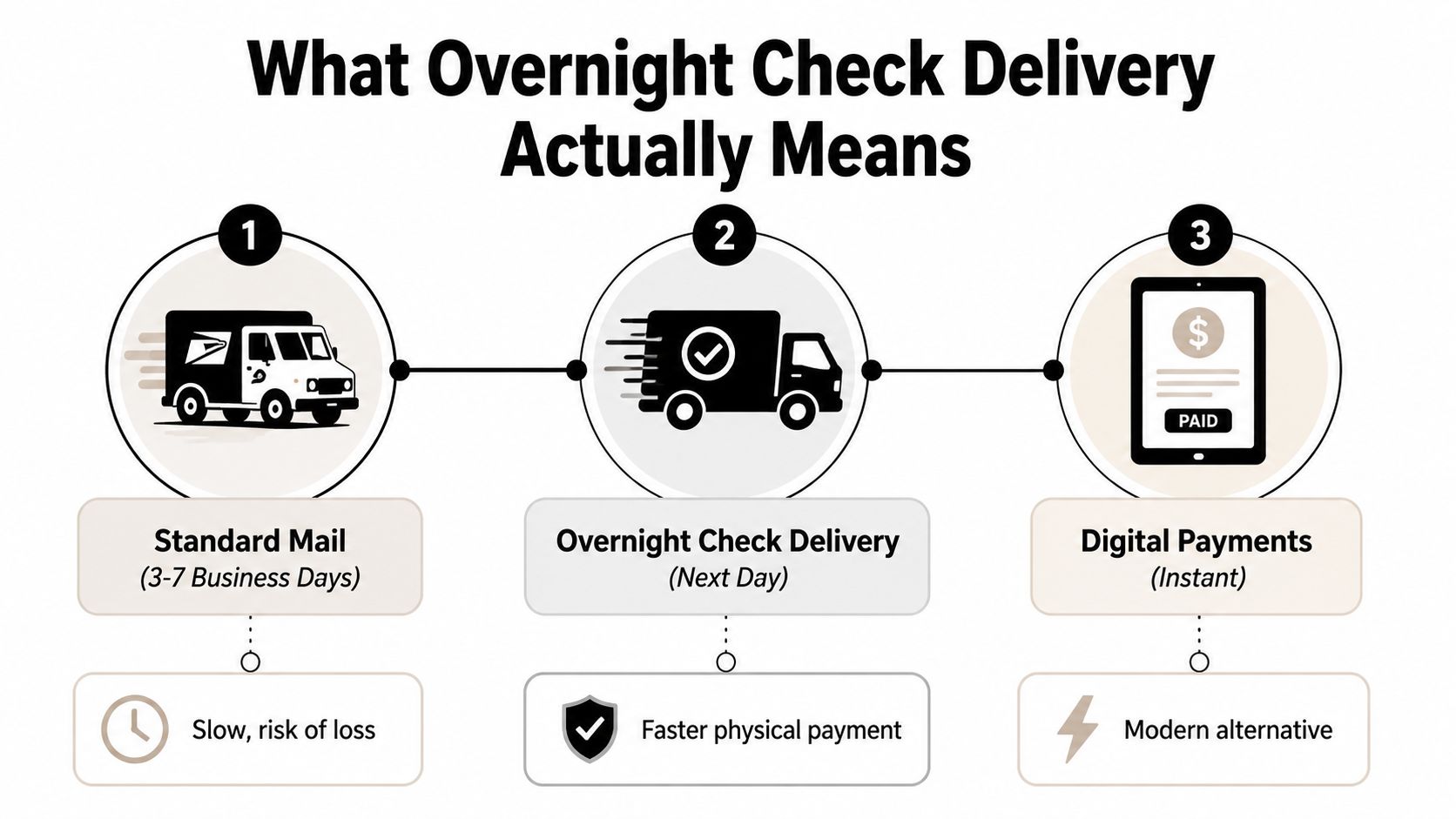
Overnight check delivery is a logistics service layered onto check processing. A provider prints a physical check, packages it, and sends it by next-day courier. Unlike a digital payment rail, it moves paper faster.
That distinction matters because check processing changed before overnight shipping became practical at scale. The U.S. shifted toward check truncation and image exchange after the Check 21 Act took effect in 2004, which made paperless handling of the check image more viable (Modern Treasury). The Federal Reserve's history also shows how large check volume already was by the time these changes mattered.
Practical rule: treat overnight check delivery as a shipping solution, not a payment finality solution.
For merchants who still need paper, this is useful. For merchants who do not, it points toward better payment rails. If you are comparing those options, start with a payment options research hub.
How the Overnight Check Process Works
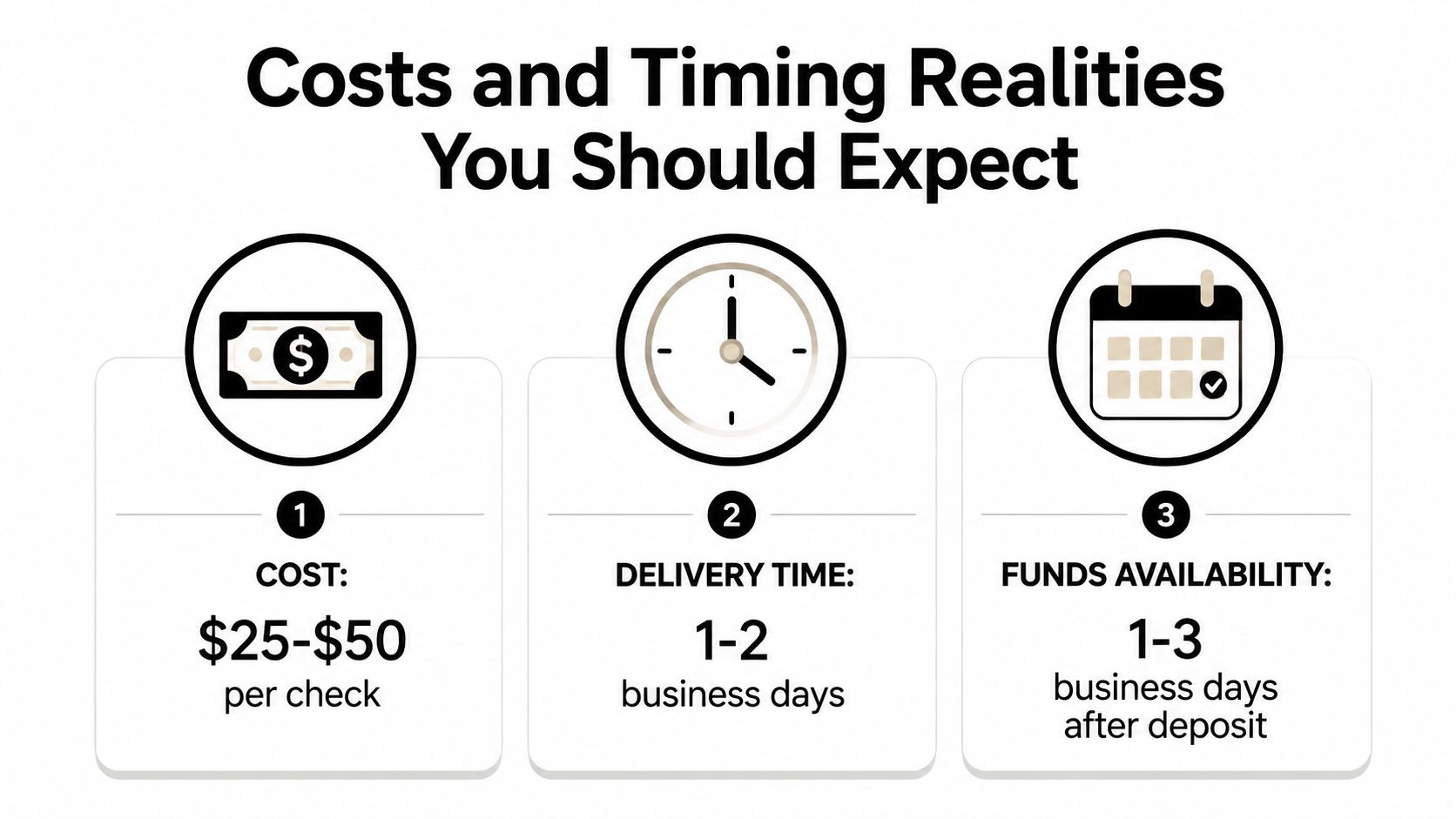
The process looks simple from the outside, but the cutoff is the key control point. Some banks can accept payment instructions as late as 10 p.m. EST and still route an official check for next-business-day delivery, with a target arrival of about 10:30 a.m. local time in the continental U.S. (JPMorgan Chase). If the instruction misses the provider's internal deadline, the check slips by at least one business day.
The sequence merchants should expect
The workflow usually runs in this order. First, the payer submits payment instructions and recipient details. Then the provider verifies the data, prints the check, packages it, hands it to a courier, activates tracking, and confirms delivery. The bottleneck is rarely the printer itself. It's usually the approval window before pickup.
For an operator, that means the safest habit is to submit earlier than you think you need to. If you wait until late evening, you're betting that the provider, the printer, and the carrier all stay inside the same schedule. That's a bad bet when a vendor is waiting on a hard deadline.
Missing the cutoff doesn't usually fail the payment. It just moves it to the next business day, which is exactly how late fees and strained vendor relationships start.
What changes when the cutoff is missed
A missed cutoff is operationally expensive because it breaks the promise you thought you bought. The check can still be processed, but the delivery clock resets. That's why merchants should think in terms of same-day instruction, not just “overnight shipping.”
The best practice is blunt. Get the payment instruction in early, confirm the provider's approval requirements, and don't assume the courier label alone guarantees delivery. The courier only takes over after the provider finishes its side of the workflow.
Costs and Timing Realities You Should Expect
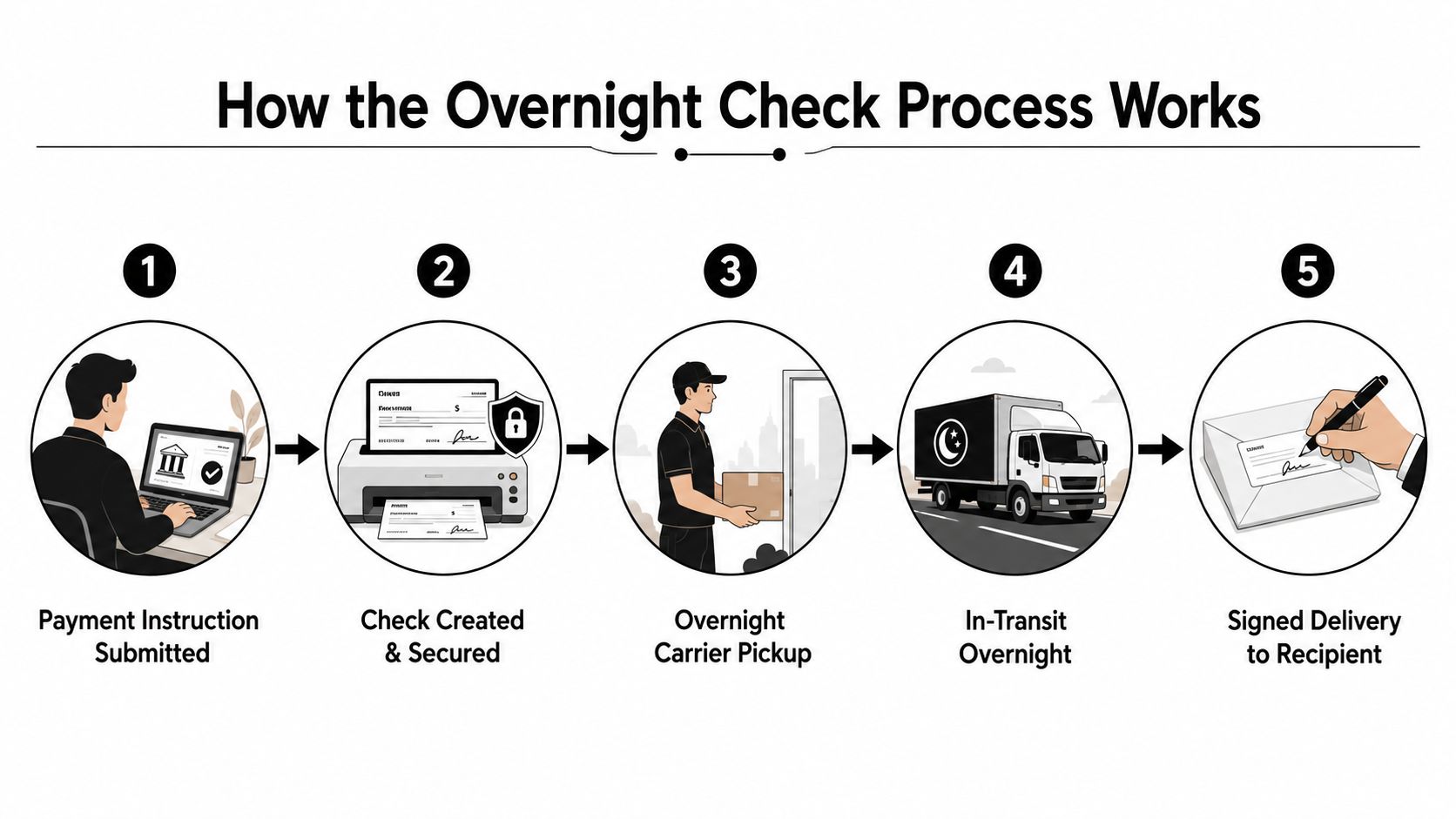
A vendor sees the envelope tomorrow, but the payment may still sit in limbo after deposit. That gap is the part merchants miss. The bank still has to process the item through the check system, and availability depends on the recipient's institution and the check's risk profile. Most checks clear in 1 to 2 business days, and the first $225 of a deposited check must generally be made available by the next business day under federal availability rules, while the remainder can still be held longer depending on the deposit (Checkomatic).
Delivery speed and settlement speed are different problems
Overnight delivery solves transit time. It does not solve settlement latency. If your goal is to avoid a vendor miss, that is fine. If your goal is immediate usable cash on the other side, a paper check is the wrong tool.
The cost side deserves the same blunt treatment. Overnight check delivery usually adds service fees and courier surcharges, and the total rises when you need special handling or a faster service class. Treat it as a premium convenience purchase, not a default way to pay.
Use the right expectation with the recipient
Set the expectation clearly before you send it. Tell the vendor the check will arrive tomorrow, but do not promise same-day spendability unless you know how their bank handles the deposit. That keeps your finance team from overselling the payment and gives the recipient a realistic timeline.
The operational rule is simple:
- Delivery confirmation does not guarantee settlement. The envelope arriving only proves the courier finished its job.
- The next business day is the delivery target. It does not guarantee cash access, because the recipient still has to deposit and clear the item.
- Fee pain is worth it only when a missed deadline is more expensive. If there is no deadline pressure, use a cheaper rail.
Check fraud risk also belongs in this calculation. Paper checks remain attractive to fraudsters because routing and account details can be exposed if the check is intercepted, altered, or reused. Faster delivery cuts transit exposure, but it does not remove the risk created by mailing paper instruments. For D2C operators and finance teams, that is another reason to reserve overnight checks for cases where the recipient requires a check and the timing pressure justifies the risk.
Set a calendar reminder for 48 hours after delivery to confirm the recipient's bank has posted the funds.
How Check Supply Can Help
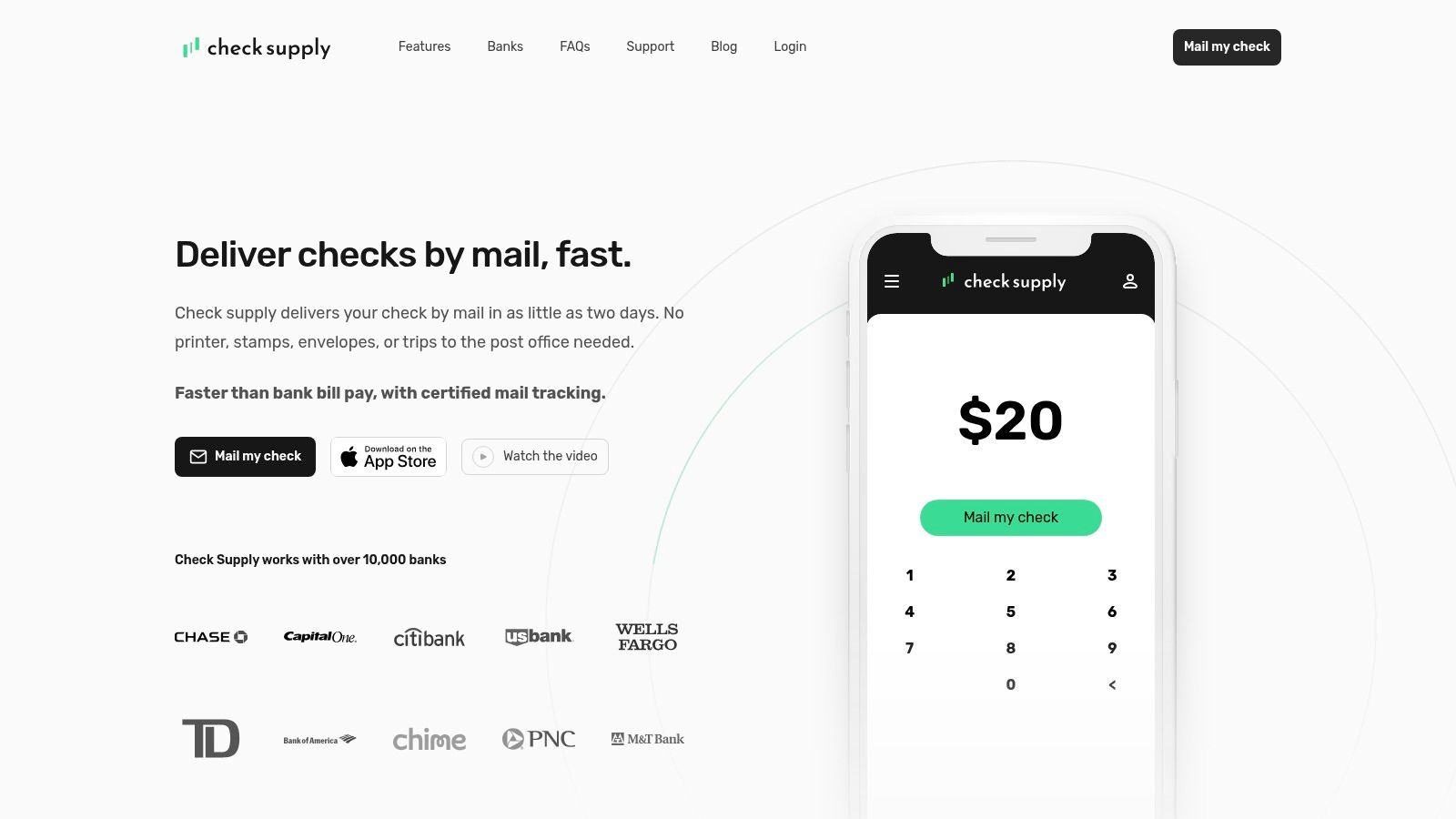
Some payment problems aren't about bank rails at all. They're about the recipient insisting on a paper check, the sender not having a checkbook handy, or the business wanting proof that the payment was mailed and tracked. That's where Check Supply is relevant, because it prints and mails physical checks to U.S. addresses through a mobile and web workflow, with Plaid bank connection, USPS mailing options, and tracking on certain tiers.
Where it's genuinely useful
Check Supply is a fit when a merchant needs paper checks without maintaining a full manual check process. It solves the awkward middle ground of rent, vendor invoices, reimbursements, and tax payments where the recipient still wants a mailed check and the sender wants to avoid printing, stuffing, and post office runs. It also gives you scheduling and recurring-payment tools, which matters if the same payee gets paid repeatedly.
The operational value is real. Same-business-day processing is available for submissions made before 3 PM EST, and the service scope is U.S. addresses only. For teams that need flexibility, the mail tiers include First-Class at $6.99, Certified Mail at $12.99, Priority Mail at $21.95, and Priority Mail Express at $49.99.
When I'd point a merchant there
I'd use it when the alternative is a manual check process that keeps breaking. I'd also use it when you need a recurring or one-off mailed check but don't want to keep check stock, stamps, and printer alignment problems in-house. If you need more detail on the mechanics, their guide on how to overnight a check is a practical reference point.
Don't confuse that convenience with a safety guarantee, though. Faster delivery doesn't erase the fraud and theft risks that come with paper.
Security Risks and Check Fraud Concerns
Paper checks are still exposed to theft after you hand them off. Overnight delivery shortens the time in transit, but it doesn't remove the basic vulnerability of a physical envelope moving through a carrier network or sitting in a mailbox. That's the trade-off most “overnight” guides gloss over.
Independent sources report more than 350,000 instances of potential check fraud in 2021 and nearly 680,000 in 2022, with later analysis citing a 90% increase in suspicious activity reports for check fraud from 2021 to 2023 and continued mail-theft vulnerability as the main entry point (Hawk AI). That doesn't mean every overnight check is unsafe. It means the channel deserves a real risk assessment.
The practical attack surface
Fraud risk usually shows up in a few ways. Mail can be stolen from residential or unsecured business mailboxes. A deposited check can be altered after theft. A courier handoff can also expose the payment if the envelope isn't sealed and tracked properly. Overnight service reduces the exposure window, but it doesn't eliminate the attack surface.
That's why I'd use overnight checks only when the recipient needs paper and the transaction value justifies the risk. For routine payments, this is the wrong rail. For high-value, time-sensitive obligations, it can still be the least-bad choice.
Safer handling standards
If you're going to use paper, don't be casual about it. Use signature-required delivery where possible, choose tamper-evident packaging, and keep positive pay or other bank-side controls in place. Those controls don't make the check invulnerable, but they reduce the odds that a stolen item becomes a successful fraud event.
If you're comparing rails and need more anti-theft context, the anti-theft and fraud category is the right place to pressure-test your stack.
Overnight Checks Versus Digital Payment Alternatives
The right payment rail depends on what problem you're trying to solve. If you need paper for compliance or recipient preference, overnight checks can be the answer. If you need speed, security, and lower operational friction, digital usually wins.
The comparison below is the cleanest way to think about it.
| Payment Method | Delivery Speed | Typical Cost | Security Level | Best For |
|---|---|---|---|---|
| Overnight check delivery | Next business day for transit | Higher because of printing and courier fees | Moderate, exposed to mail theft and check fraud | Recipients who require paper checks |
| ACH transfer | Usually 1 to 3 business days | Low | Higher than paper checks | Routine vendor payments |
| Wire transfer | Same day when processed | High | High, but final and hard to reverse | Urgent, high-value payments |
| E-check | Faster than paper, slower than wires | Usually lower than wires | Higher than mailed checks | Recurring or digital-friendly payees |
What merchants should push for first
ACH should be your default if the recipient accepts it. It's usually cheaper, cleaner, and easier to reconcile. Wires are the right emergency tool when finality matters and the fee doesn't. E-checks make sense when you're paying the same party repeatedly and want something lighter than paper.
If a vendor insists on paper, challenge that default before you accept it. A lot of recipients say “check only” because that's what they're used to, not because the business model requires it. Push back once, then comply if the answer still has to be paper.
For merchants already leaning digital, the Apple Pay implementation guide is a better place to start than building more check dependency into your operations.
My recommendation: use overnight checks as an exception rail, not a recurring habit.
When Shopify Merchants Should Use Overnight Checks
Shopify merchants shouldn't treat overnight check delivery as a normal payment workflow. It's a backup tool for specific situations. Use it when a payment deadline is real, the recipient wants or requires paper, and the cost of delay is higher than the fee and fraud exposure.
Good use cases
Paying a supplier who won't ship without a paper check is a legitimate use case. So is settling an urgent vendor invoice that would otherwise stall production, or making a legal or compliance payment that needs physical documentation. In those cases, the check is part of operational continuity, not a convenience.
You should also use it when the recipient can't or won't accept digital methods and the deadline is immediate. That's where the service earns its keep.
Bad use cases
Don't use overnight checks for routine recurring bills, low-value payments, or any payee you can convince to accept ACH. Don't use them when the recipient is in a context where mail theft or access risk is obviously high. And don't use them when you need instant funds, because delivery speed won't solve settlement delay.
A simple decision rule works well:
- Ask whether the recipient needs paper.
- Ask whether the deadline is hard enough to justify overnight cost.
- Ask whether the payment value is high enough that paper risk is acceptable.
- Use a digital alternative if any of those answers are no.
That's the operational lens I'd use for every D2C finance team. If you're still relying on manual payment methods too often, start evaluating automation and payment tools before the check process becomes a permanent liability.
Key Takeaways and Next Steps
Overnight check delivery is a shipping solution wrapped around a paper payment. It can solve urgent vendor and compliance problems, but it does not turn a check into instant money. The important distinction is still delivery versus settlement.
The habits that matter are straightforward. Submit early enough to beat the provider cutoff, verify the recipient really needs paper, and don't ignore the fraud risk that comes with physical transit. If the recipient accepts ACH or a wire, use that first. If they don't, overnight delivery is the workaround, not the ideal.
Before you send the next check, ask three questions. Does this payment require paper? Does timing justify the premium? Is there a safer digital option the recipient would accept if I pushed back? If you can answer those, you'll avoid most of the expensive mistakes merchants make with paper payments.
For merchants building a cleaner payments stack over time, use The SaaS Hub to compare automation tools, payment apps, and fraud-focused solutions that reduce your dependence on paper-based workflows.